
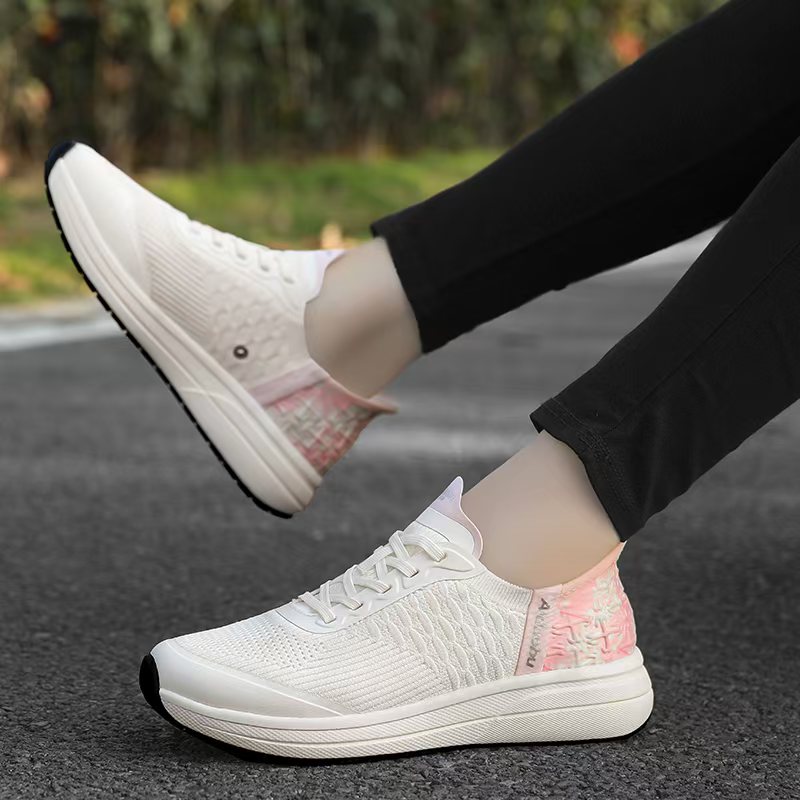
For wholesale slip-on shoes, request a row for each offered size and width combination, then attach the supplier’s measurement definition and a corresponding sample reference. Keep the catalogue label, the observed sample and the ordered quantity in separate fields. A size range in a product description is a starting point for questions, rather than a complete assortment or a fit guarantee.
Read the catalogue range without inventing a conversion
The official Quick-Step Shoes listing shows 220–280mm, EU 35–46 and Width Type 1–3. It also identifies men’s and women’s product scope. These entries establish useful discussion fields, but the page does not supply a row-by-row correspondence between every millimetre designation, EU label and width type. Ask the supplier to provide that correspondence for the exact version being quoted.
Do not automatically interpret the millimetre field as measured foot length, finished insole length or an internal shoe dimension. Those are different references. Ask which one the designation represents, how it is determined and whether the same rule applies across the proposed assortment. A buyer should not convert the published endpoints into intermediate sizes that the supplier has not actually offered.
Create one quotation line for each offered combination
Start with the product reference and proposed appearance, then enter the supplier’s original size designation exactly. Add the associated width code in its own column. A number such as Type 1 is not a universally defined width measurement. Request the supplier’s definition instead of relabelling it narrow, regular or wide from an assumption.
Separate an unavailable combination from an unanswered question. If the supplier offers one width for a particular size, the matrix should show that limitation directly. An empty cell must not silently become permission to substitute another combination. Ask the supplier to identify any proposed alternative before calculating quantities or comparing quotations.
RFQ field | Supplier response requested | Buyer control
Product and appearance reference | Exact offered model and colour reference | Attach the matching catalogue view
Original size label | Supplier’s size designation and associated EU label | Do not create an unconfirmed conversion
Width code | Offered Type and its measurement definition | Keep each code separate
Quantity basis | Requested and quoted quantity for each combination | State whether the unit is a pair
Unresolved combination | Not offered, alternative proposed or awaiting reply | No silent substitution
Define a repeatable sample measurement record
When a sample is available, record its identity before taking measurements. Include the supplier’s size and width labels, the visible colour reference, the sample date and the measurement method supplied for that model. Specify the endpoints, measuring tool and sample condition so that a later reviewer can understand what was actually observed.
Keep the supplier’s declared value beside the buyer’s observed result. Do not overwrite one with the other or use a photograph as evidence of a numerical dimension. If an acceptance range is needed, request written agreement on that range and method. This article does not establish an industry tolerance or a body-fit recommendation.
• Identify the exact sample and its original size and width labels.
• Ask the supplier to define the measurement reference and endpoints.
• Record the observed result, method and unresolved difference separately.
• Approve a specific matrix revision, rather than an unqualified catalogue range.
Reconcile the assortment before comparing quotations
Add the quantities in all approved rows and compare that sum with the stated order total. If several colourways are involved, perform the same check for each colour as well as for the complete request. This prevents a correct overall total from concealing a different size or width distribution.
Ask whether the quoted price applies to the same row structure and supply unit used in the request. Packaging, separately proposed extras and other commercial details require their own written confirmation. The product photograph is an appearance reference; it does not establish included packaging, a particular material composition or any performance claim.
Send a compact approval and change handover
Send the completed matrix through the official contact channel with the product reference, sample record and outstanding questions. Ask the supplier to acknowledge the revision that will be used for the quotation. Keep a named decision owner and a date for that acknowledgement so purchasing and receiving teams work from the same record.
If the supplier later changes a size designation, width definition or offered combination, compare the old and proposed rows before accepting the revision. Record which quantities and sample references are affected. This is an assortment-control step, not evidence that the product has been tested for comfort, slip resistance, water resistance or any health outcome.
Frequently asked questions
Does the listed EU range confirm every size is available?
No. Request the actual offered combinations for the selected version. A range alone does not confirm every intermediate label, width or colour combination.
Can Width Type 1–3 be translated into standard width letters?
Only if the supplier provides a definition and confirms the proposed correspondence. Retain the original codes while that question remains unresolved.
Can the product photo confirm fit or a measurement?
No. Use it to identify appearance and the catalogue reference. Numerical dimensions and fitting decisions need an agreed method and appropriate sample evidence.
What should be approved before a purchase order?
Approve the offered combination matrix, its quantity basis, the sample references and the unresolved-item list. Obtain a written supplier acknowledgement for the same revision.
Product and contact references
https://jzyshoes.com/product/%e9%97%aa%e7%a9%bf%e9%9e%8b/
https://jzyshoes.com/product/%e4%b9%9d%e5%ad%94%e9%9e%8b/
https://jzyshoes.com/contact/
https://jzyshoes.com/blog/